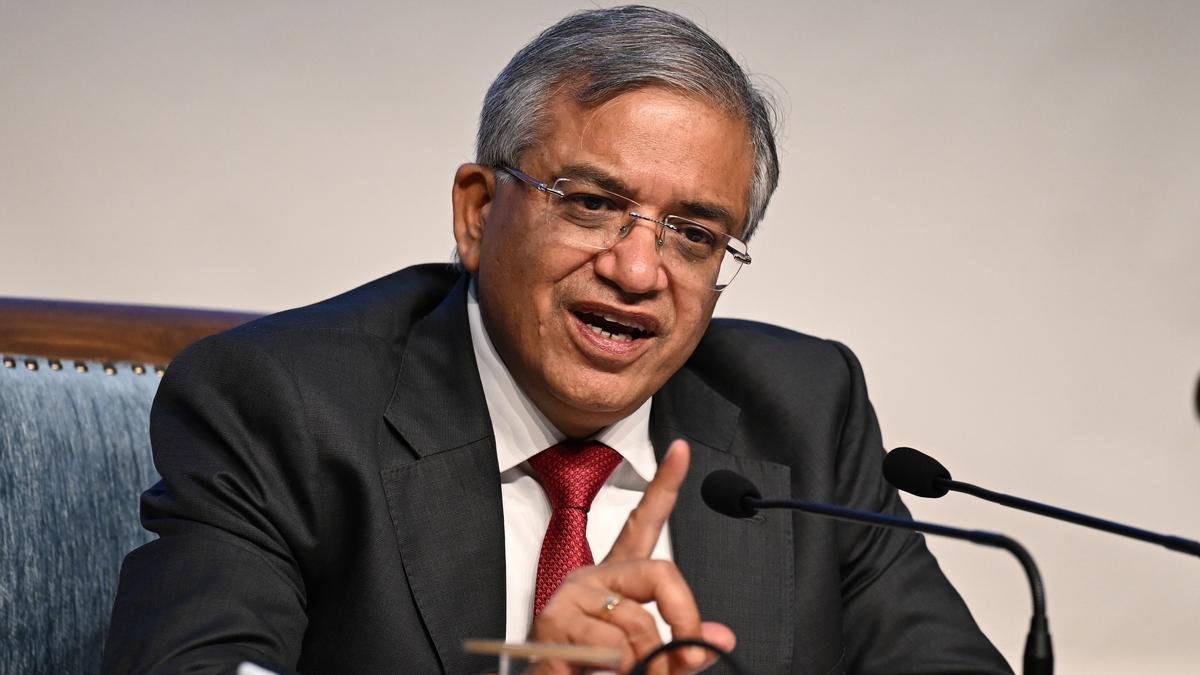
Gyanesh Kumar is an Indian Administrative Service (IAS) officer who became the 26th Chief Election Commissioner of India on 19 February 2025. Before taking charge of the Election Commission of India (ECI), he held senior positions in both the central and Kerala governments, including Secretary in the Ministry of Cooperation and Secretary in the Ministry of Parliamentary Affairs.
His administrative career has included work in public finance, defence, home affairs, infrastructure and government administration. In 2026, Kumar has also attracted national attention amid protests and political debate over electoral-roll revisions and the functioning of the Election Commission.
This Gyanesh Kumar biography covers his education, IAS career, appointment as Chief Election Commissioner, responsibilities, family information and the major developments surrounding his tenure.
Gyanesh Kumar Biography: Quick Facts
| Detail | Information |
|---|---|
| Full name | Gyanesh Kumar |
| Nationality | Indian |
| Profession | Civil servant and constitutional officeholder |
| Service | Indian Administrative Service (IAS) |
| IAS batch | 1988 |
| Cadre | Kerala |
| Education | B.Tech in Civil Engineering |
| Engineering institution | IIT Kanpur |
| Additional studies | Business Finance; Environmental Economics |
| Business Finance institution | ICFAI, India |
| Environmental Economics institution | Harvard University, USA |
| Previous position | Secretary, Ministry of Cooperation |
| Election Commissioner | Appointed in March 2024 |
| Chief Election Commissioner | Assumed office on 19 February 2025 |
| Current position in 2026 | 26th Chief Election Commissioner of India |
The Election Commission of India confirms Kumar’s IAS batch, educational qualifications, previous government positions and appointment history. His exact date of birth and detailed personal financial information are not included in the official profile used for this article. (Official ECI profile)
Who Is Gyanesh Kumar?
Gyanesh Kumar is the head of the Election Commission of India, the constitutional authority responsible for administering elections to Parliament, state legislatures and the offices of the President and Vice-President.
As Chief Election Commissioner (CEC), Kumar leads the Election Commission alongside the other Election Commissioners. The institution is responsible for overseeing electoral processes, issuing election-related directions within its legal authority and ensuring that elections are conducted according to the Constitution and applicable laws.
Before joining the Election Commission, Kumar spent decades in the civil services. His career included administrative responsibilities in Kerala and senior positions in several central government ministries.
His public profile is therefore primarily associated with civil administration, electoral governance and constitutional responsibilities, rather than private business or political party leadership.
Gyanesh Kumar Age and Early Life
Gyanesh Kumar is a senior Indian civil servant who entered the IAS in 1988.
Reliable official sources consulted for this profile do not establish a verified full date of birth. For that reason, an exact age should not be published without confirmation from an authoritative record.
Similarly, detailed information about his childhood, hometown and family background is limited in the official biography available from the Election Commission.
For readers researching Gyanesh Kumar’s background, his verified education and public-service career provide a more reliable starting point than unsupported personal details circulated online.
Gyanesh Kumar Education
Gyanesh Kumar completed a Bachelor of Technology in Civil Engineering from the Indian Institute of Technology (IIT) Kanpur.
His academic background also includes studies in two additional fields:
- Business Finance at ICFAI, India
- Environmental Economics at Harvard University, USA
These qualifications reflect a combination of technical education and further study in finance and economics.
His civil-engineering background was followed by a career in administration, where he worked across areas such as public infrastructure, government finance, internal administration and policy implementation.
The Election Commission’s official profile lists these educational qualifications. (Source: Election Commission of India)
Gyanesh Kumar IAS Career
Gyanesh Kumar belongs to the 1988-batch Kerala cadre of the Indian Administrative Service. His career has included assignments in the Kerala state government and the Government of India.
Early Administrative Career in Kerala
During his service in Kerala, Kumar held several district-level and departmental positions.
His assignments included:
- Sub Collector of Adoor
- District Collector of Ernakulam
- Municipal Commissioner of Cochin Corporation
- Managing Director of Kerala State Cooperative Bank
- Secretary of the Goshree Islands Development Authority
- Managing Director of Trivandrum Airport Development Society
- Resident Commissioner of Kerala House in New Delhi
These roles involved district administration, municipal governance, cooperative banking, infrastructure development and coordination between state and central authorities.
His experience across different departments gave him exposure to a range of public-administration responsibilities.
Work in the Kerala Government Secretariat
Kumar later served as Secretary to the Government of Kerala.
His responsibilities included departments and functions related to:
- Finance Resources
- Fast Track Projects
- Public Works
- Modernising Government programmes
- Food, Civil Supplies and Consumer Affairs
These assignments covered public spending, infrastructure, administrative reform and the delivery of essential services.
Central Government Career
Kumar subsequently moved into senior positions in the Government of India.
His central-government assignments included:
Joint Secretary, Ministry of Defence: Work within the defence administration.
Joint Secretary and Additional Secretary, Ministry of Home Affairs: Responsibilities in a major ministry dealing with internal administration and national security matters.
Secretary, Ministry of Parliamentary Affairs: Work related to coordination between the government and Parliament.
Secretary, Ministry of Cooperation: Senior administrative responsibility in a ministry focused on the cooperative sector.
The Election Commission’s official biography records these roles as part of his professional career. (Source: ECI)
When Was Gyanesh Kumar Appointed Election Commissioner?
Gyanesh Kumar was appointed an Election Commissioner on 15 March 2024, following his retirement from the IAS on 31 January 2024.
His appointment was announced by the Ministry of Law and Justice through the Government of India’s Press Information Bureau. (PIB announcement)
As an Election Commissioner, he became part of the constitutional body responsible for administering elections in India.
The role placed him in a position to participate in decisions concerning electoral administration, election preparedness and the implementation of the legal framework governing elections.
How Did Gyanesh Kumar Become Chief Election Commissioner?
Gyanesh Kumar became Chief Election Commissioner in February 2025.
On 17 February 2025, the Ministry of Law and Justice issued the appointment notification. His appointment took effect on 19 February 2025, when he assumed office as the 26th Chief Election Commissioner, succeeding Rajiv Kumar.
The official appointment notification was issued under the Chief Election Commissioner and Other Election Commissioners (Appointment, Conditions of Service and Term of Office) Act, 2023. (Government notification)
As CEC, Kumar heads the Election Commission and shares responsibility for its constitutional and statutory functions with the other Commissioners.
What Does the Chief Election Commissioner Do?
The Chief Election Commissioner leads the Election Commission of India, an autonomous constitutional authority established under Article 324 of the Constitution.
The Commission administers elections to:
- The Lok Sabha
- The Rajya Sabha
- State Legislative Assemblies
- The offices of the President and Vice-President
Its responsibilities include election scheduling, electoral-roll administration, oversight of election machinery and the implementation of applicable election rules.
The CEC’s role is particularly important during national and state elections because the Commission must coordinate a large administrative system involving election officials, state authorities and other institutions.
The Chief Election Commissioner does not act as a political party leader. The office is part of India’s constitutional election-administration framework.
Gyanesh Kumar and the Election Commission in 2026
In 2026, Gyanesh Kumar became a focus of public debate surrounding electoral-roll revisions and the Election Commission’s conduct.
Opposition parties and protesters raised concerns about the Special Intensive Revision (SIR) of electoral rolls and alleged that the process could unfairly affect eligible voters. Some demonstrations called for Kumar’s resignation.
The Election Commission has disputed allegations of partisan conduct. The controversy has involved questions about voter-list accuracy, the process for removing or adding names and the responsibilities of election authorities.
A balanced account should distinguish between allegations made by political parties or protesters, the Commission’s response and findings established by a court or an official inquiry. An allegation alone does not establish electoral fraud or deliberate political bias.
Recent reporting by Reuters documented protests and police detentions connected to demands for Kumar’s resignation in October 2026. (Reuters report, 13 October 2026)
What Is the Special Intensive Revision of Electoral Rolls?
The Special Intensive Revision, commonly called SIR, is a process intended to review and update electoral rolls.
Electoral rolls are the official lists of eligible voters used for elections. Maintaining accurate lists is important because they help establish who is entitled to vote in a particular constituency.
A revision may involve checking voter records, identifying duplicate or outdated entries and enabling eligible citizens to correct or update their information.
The process can also raise practical concerns about documentation, access, deadlines and the risk of eligible voters being incorrectly excluded. These questions have become part of the wider debate surrounding electoral-roll revisions in India.
When reporting SIR, it is important to consult the relevant Election Commission notifications, applicable court orders and documented responses from affected parties rather than relying only on political statements.
Gyanesh Kumar Family and Personal Life
Gyanesh Kumar’s public profile is primarily centred on his administrative career and constitutional office.
The official Election Commission biography used for this article does not provide detailed information about his spouse, children or wider family. Reliable confirmation of those details is therefore limited.
A factual biography should avoid presenting unverified family names, relationship details or personal-life claims as established information.
Gyanesh Kumar Net Worth and Salary
There is no reliable, verified public estimate of Gyanesh Kumar’s personal net worth in the sources used for this profile.
As a public officeholder, his official remuneration and service conditions are governed by applicable laws and government rules. However, his personal wealth should not be inferred from his position or career history.
For accuracy, websites should distinguish between an official salary, declared assets where available and an independently verified net-worth estimate. These are different financial measures.
Gyanesh Kumar Career Timeline
| Year or period | Milestone |
|---|---|
| 1988 | Entered the IAS; Kerala cadre |
| Early career | Served in district and departmental roles in Kerala |
| Later career | Held senior positions in the Kerala government |
| Central-government service | Worked in the Ministries of Defence, Home Affairs, Parliamentary Affairs and Cooperation |
| 31 January 2024 | Retired from the IAS |
| 15 March 2024 | Appointed Election Commissioner |
| 17 February 2025 | Appointment notification issued for Chief Election Commissioner |
| 19 February 2025 | Assumed office as the 26th Chief Election Commissioner |
| 2026 | Continued as CEC amid public debate over electoral-roll revisions |
The official ECI profile and Government of India appointment notification establish the major dates in this timeline.
Why Is Gyanesh Kumar Important in Indian Public Administration?
Gyanesh Kumar’s career is notable for its progression from state-level administration to senior central-government positions and then to the Election Commission of India.
His work has spanned infrastructure, district administration, public finance, home affairs, parliamentary coordination and cooperation policy.
As Chief Election Commissioner, his responsibilities extend beyond routine administration. The Election Commission’s decisions can affect the conduct of elections and public confidence in the electoral process.
For this reason, reporting on his tenure should rely on official documents, court records and credible journalism, particularly when discussing contested issues.
Frequently Asked Questions About Gyanesh Kumar
Who is Gyanesh Kumar?
Gyanesh Kumar is an Indian civil servant and the 26th Chief Election Commissioner of India. He assumed office on 19 February 2025.
What is Gyanesh Kumar’s current position?
As of 2026, he is the Chief Election Commissioner of India and heads the Election Commission alongside the other Election Commissioners.
When did Gyanesh Kumar become Chief Election Commissioner?
He assumed office on 19 February 2025, succeeding Rajiv Kumar.
What is Gyanesh Kumar’s educational qualification?
He holds a B.Tech in Civil Engineering from IIT Kanpur and has also studied Business Finance at ICFAI and Environmental Economics at Harvard University.
Which IAS batch does Gyanesh Kumar belong to?
He is a 1988-batch IAS officer from the Kerala cadre.
Which positions did Gyanesh Kumar hold before becoming CEC?
His previous assignments included senior roles in the Kerala government and central-government ministries, including the Ministries of Defence, Home Affairs, Parliamentary Affairs and Cooperation.
When was Gyanesh Kumar appointed Election Commissioner?
He was appointed Election Commissioner on 15 March 2024.
What is the Election Commission of India responsible for?
The Election Commission administers elections to Parliament, state legislatures and the offices of the President and Vice-President.
What is the SIR controversy involving Gyanesh Kumar?
The controversy concerns the Special Intensive Revision of electoral rolls. Critics have raised concerns about voter-list revisions, while the Election Commission has disputed allegations of partisan conduct. The claims and responses should be assessed using official records and independent reporting.
Has Gyanesh Kumar faced calls to resign?
Yes. In October 2026, protests took place in which demonstrators demanded his resignation over electoral-roll revision concerns. These demands reflect the protesters’ position and do not, by themselves, establish wrongdoing.
What is Gyanesh Kumar’s age?
An exact age cannot be reliably stated from the official biography used for this article because it does not establish his full date of birth.
Who is Gyanesh Kumar’s wife?
Reliable, verified information about his spouse is not included in the official source used for this profile.
What is Gyanesh Kumar’s net worth?
No reliable, independently verified net-worth estimate was identified for this profile. Unsubstantiated figures should not be published as facts.
What is the difference between an IAS officer and the Chief Election Commissioner?
An IAS officer is a member of India’s civil service. The Chief Election Commissioner is the head of the Election Commission of India, a constitutional authority responsible for administering elections. Gyanesh Kumar served in the IAS before taking up the CEC role.
Conclusion
Gyanesh Kumar’s career spans more than three decades of public administration, from district-level responsibilities in Kerala to senior positions in the central government.
After retiring from the IAS in January 2024, he became an Election Commissioner in March 2024 and assumed office as India’s 26th Chief Election Commissioner on 19 February 2025.
His tenure has drawn public attention to the Election Commission’s responsibilities, particularly during debate over electoral-roll revisions in 2026. Understanding his role requires separating verified career facts from political allegations and evaluating contested claims against official records and independent reporting.
For readers searching for Gyanesh Kumar’s biography, education, IAS career and role as Chief Election Commissioner, his documented public-service record provides the most reliable foundation.