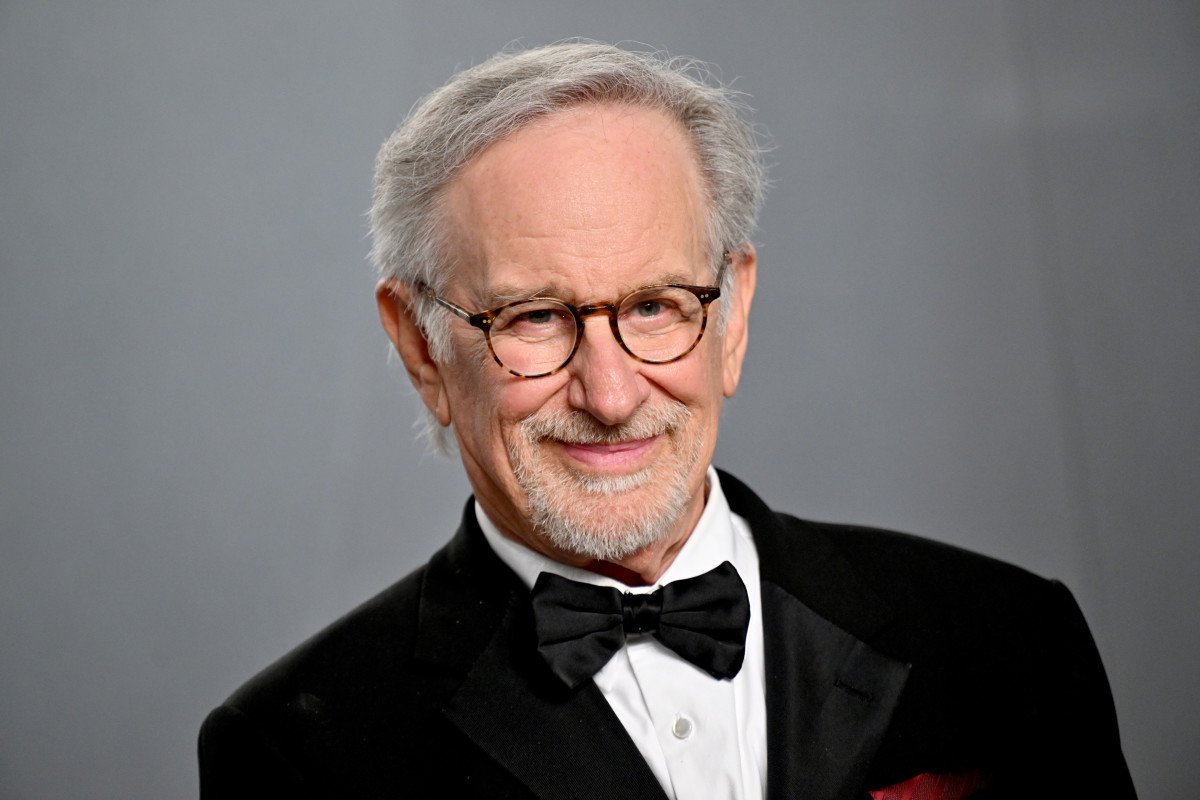
Steven Spielberg Biography: Net Worth, Wife, Movies, Children, Age & Career and Wikipedia

Full Name: Steven Allan Spielberg Date of Birth: December 18, 1946 Birthplace: Cincinnati, Ohio, USA Age: 78 years (as of 2025) Height: 5 feet 7 inches (170 cm) Weight: Approximately 75 kg (165 lbs) Religion: Jewish Nationality: American Net Worth: Approximately $7.1 Billion (Forbes)


The Boy Who Grew Up Behind a Camera

Steven Spielberg was not born into Hollywood royalty. He was just a kid from Cincinnati, Ohio, with a restless imagination and a camera that his parents probably thought was a phase.

His father, Arnold Spielberg, was an electrical engineer. His mother, Leah Adler, was a concert pianist and restaurateur. The family was Jewish, and the shadow of the Holocaust still hung heavy — Arnold had lost many relatives in Europe during World War II. That wound, passed down quietly through the family, would eventually shape one of the most important films ever made.

The family moved constantly. New Jersey, then Arizona, then finally California. And through every move, through every new school and new neighborhood, Steven carried that camera.

At just 12 years old, he filmed his first “movie” — a train crash using his toy Lionel trains, shot on an 8mm camera. At 13, he made a 40-minute war film called “Escape to Nowhere” and actually won an award for it. He was charging neighborhood kids 25 cents to watch his films in his backyard.

This was not a hobby. This was a calling.


The Rejection That Almost Stopped Everything

When it came time for college, Spielberg set his sights on the University of Southern California’s prestigious film school. He applied once — rejected. Applied again — rejected. Applied a third time — rejected again.

The same USC that now has a building named after him turned him away three times.

He enrolled at California State University, Long Beach instead, joined the Theta Chi Fraternity, and quietly kept making films. Then one day, he walked into Universal Studios — not as an employee, not as an intern, just as someone who belonged there — and started showing up every day. He found an empty office, put his name on the door, and got to work.

He made a short film called “Amblin’.” Studio executives saw it. And at just 22 years old, Steven Spielberg became the youngest director ever to sign a seven-year deal with a major Hollywood studio.

USC never called back. He never needed them to.


Breaking Into Television

Before the blockbusters, there was television. Through the late 1960s and early 1970s, Spielberg directed episodes of hit TV shows like “Marcus Welby M.D.” and “Columbo: Murder by the Book.” He was learning, sharpening, waiting for his moment.

In 1971, he directed “Duel” — a TV movie about a man being chased by a mysterious truck driver. It was so good that it was released theatrically in Europe. Critics noticed. The industry noticed. Spielberg was no longer just a TV guy.


Jaws (1975) — The Film That Changed Everything

Nobody had ever made a movie the way Spielberg made “Jaws.”

Based on Peter Benchley’s novel, the story of a great white shark terrorizing a small beach town was supposed to be a straightforward thriller. But the mechanical shark kept breaking down during filming, so Spielberg was forced to keep the shark mostly hidden — which made the film ten times more terrifying. The tension came from what you couldn’t see. The music by John Williams did the rest.

“Jaws” grossed over $400 million worldwide on a modest budget. It won three Academy Awards. And for the first time in Hollywood history, a studio released a major film in the summer and marketed it like a cultural event — television ads, merchandise, a nationwide release on thousands of screens at once.

The summer blockbuster was born. And it was born because of Steven Spielberg.


The Golden Run — Films the World Will Never Forget

What followed “Jaws” was one of the most extraordinary streaks in cinema history.

Close Encounters of the Third Kind (1977) earned Spielberg his first Academy Award nomination for Best Director. A film about alien contact that somehow felt deeply personal about wonder, obsession, and the need to believe in something bigger than yourself.

Raiders of the Lost Ark (1981) introduced the world to Indiana Jones. Co-created with George Lucas, it was pure adventure filmmaking at its finest  action, humor, danger, and Harrison Ford in a fedora. The franchise eventually stretched to four films, with a fifth released in 2023.

E.T. the Extra-Terrestrial (1982) is the film that made grown adults cry in cinemas and has never stopped doing so. A lonely boy befriends a stranded alien. That’s it. That’s the whole story. And somehow it became one of the most emotionally devastating films ever made. It earned over $800 million worldwide and held the record as the highest-grossing film of all time for over a decade.

The Color Purple (1985) was Spielberg stepping into serious dramatic territory. Based on Alice Walker’s Pulitzer Prize-winning novel, the film starred Whoopi Goldberg and Oprah Winfrey in her film debut. Roger Ebert named it the best film of the year. It received 11 Oscar nominations.

Empire of the Sun (1987) was the first American film shot in Shanghai since the 1930s. Critically acclaimed, featuring a young Christian Bale in a breakthrough performance.

Schindler’s List (1993) — If Spielberg only made this one film, his place in history would still be secure. Shot in black and white in Poland, it told the true story of Oskar Schindler, a German businessman who saved over a thousand Jewish lives during the Holocaust. The film silenced audiences. It won seven Academy Awards including Best Director and Best Picture. It remains one of the greatest films ever made — full stop.

Jurassic Park (1993) — The same year. Spielberg directed two completely different masterpieces in the same year. Jurassic Park brought dinosaurs to life with revolutionary CGI technology that changed filmmaking forever. It briefly held the record as the highest-grossing film of all time and launched one of the most successful franchises in cinema history.

Saving Private Ryan (1998) — The first 25 minutes of this film — the D-Day landing sequence — is still studied in film schools around the world. It is the most visceral, honest depiction of war ever put on screen. Spielberg won his second Academy Award for Best Direction.

The decades that followed brought Lincoln (2012), Bridge of Spies (2015), Ready Player One (2018), West Side Story (2021), and The Fabelmans (2022) — a semi-autobiographical film about his own childhood that critics called his most personal work.


Net Worth  How a Director Became a Billionaire

Spielberg’s net worth is listed by Forbes at approximately $7.1 billion, making him one of the wealthiest people in the entertainment world and one of the very few filmmakers to become a billionaire primarily through directing and producing.

His wealth comes from several streams:

His films alone have generated over $2.7 billion in fees and profit participation since 1974. He co-founded Amblin Entertainment, which continues to produce major films and television. He co-founded DreamWorks SKG with Jeffrey Katzenberg and David Geffen — and when DreamWorks was sold to Paramount/Viacom in 2005, the deal was worth approximately $775 million in cash.

He has a perpetual consulting agreement with Universal Studios tied to theme park attractions based on his films — Jurassic Park, E.T., and others. The carrying value of that agreement alone was listed at $1.1 billion in Comcast’s annual report.

Then there is the George Lucas story. Just before both “Jaws” and “Star Wars” were releasing around the same time, Lucas was nervous about Star Wars and offered Spielberg 2.5% of Star Wars profits in exchange for a small percentage of Jaws. Spielberg took the deal. Star Wars went on to earn billions. Spielberg still receives that royalty to this day — from a film he had nothing to do with.

Beyond films, he owns a 109-meter luxury yacht called “Seven Seas”, bought for approximately $182 million. He has a mansion in Pacific Palisades, Los Angeles — easily worth north of $100 million — a property in The Hamptons, and a home in Naples, Florida. He drives a Tesla and owns several Aston Martins.


Personal Life Love, Divorce, and a Family of Seven

First Marriage: In 1985, Spielberg married actress Amy Irving, with whom he had a son, Max. But the demands of two high-powered careers pulled them apart, and they divorced in 1989. It was one of the most expensive celebrity divorces in Hollywood history at the time.

Second Marriage: During the making of “Indiana Jones and the Temple of Doom” in 1984, Spielberg met actress Kate Capshaw, who played the female lead. He fell in love on set. They married on October 12, 1991, and Kate converted to Judaism before the wedding.

They have been together for over 30 years — which in Hollywood is practically a miracle.


Children A Full and Blended Family

Spielberg and Capshaw have a blended family of seven children:

Max Samuel Spielberg (born 1985) — Son from Amy Irving. Works as a film producer.

Jessica Capshaw (born 1976) — Kate’s daughter from a previous relationship, Spielberg’s stepdaughter. Known for her role as Dr. Arizona Robbins on “Grey’s Anatomy.”

Theo Spielberg — Adopted. Works as a musician.

Sasha Spielberg (born 1990) — Daughter of Steven and Kate. Actress and musician who performs under the name “Buzzy Lee.”

Sawyer Spielberg (born 1992) — Son of Steven and Kate. Has pursued acting.

Mikaela Spielberg — Adopted. Has taken her own path in life outside of Hollywood.

Destry Allyn Spielberg (born 1996) — Youngest child of Steven and Kate. Works as a model and actress.

Several of his children have found their own voices in creative fields — a testament to the household they grew up in.


Awards and Honors — A Life’s Work, Recognized

  • 3 Academy Awards — Best Director for Schindler’s List (1994) and Saving Private Ryan (1999), and Best Picture for Schindler’s List
  • 4 Directors Guild of America Awards
  • 2 BAFTA Awards
  • AFI Life Achievement Award (1995)
  • Kennedy Center Honor (2006)
  • Presidential Medal of Freedom (2015) — the highest civilian honor in the United States
  • EGOT winner (2026) — He has now won an Emmy, Grammy, Oscar, and Tony — one of the rarest achievements in entertainment
  • Produced 13 films nominated for Best Picture at the Oscars — a record no producer or director has matched
  • His films have collectively grossed over $10 billion worldwide

Things Most People Don’t Know About Spielberg

He was diagnosed with dyslexia at age 60. He says it actually helped him — it made him a more visual thinker, more dependent on images than words.

He returned to Cal State Long Beach in 2002 and officially completed his bachelor’s degree in Film Production and Electronic Arts  37 years after dropping out.

He resigned from the Boy Scouts of America national advisory board in 2001 because of their anti-homosexuality policy. That took principle.

After making Schindler’s List, he founded the USC Shoah Foundation, which has recorded over 51,000 testimonies from Holocaust survivors and witnesses. He wanted to make sure the world would never forget.

He is a close personal friend of former President Bill Clinton.

His Pacific Palisades home has a Hobbit-themed TV room — complete with a retractable TV and a hobbit-style fireplace. He said in an interview: “Hobbits were part of my personal mythology growing up.”


His Best Movie — The One That Defines Him

Ask ten different people and you’ll get ten different answers. That’s the mark of a filmmaker who has worked across genres without ever repeating himself.

“Jaws” changed cinema. “E.T.” made you cry. “Raiders of the Lost Ark” made you feel like a kid again. “Jurassic Park” made your jaw drop. “Schindler’s List” made you think differently about the world. “Saving Private Ryan” made you feel the weight of sacrifice.

If forced to choose one, most critics and film scholars point to Schindler’s List — not just as Spielberg’s best film, but as one of the greatest films ever made by anyone. It is the rare film that fulfills both its artistic and its moral responsibility. It does not entertain so much as it bears witness.

But the honest answer is this: his best film is whichever one you watch first and can’t stop thinking about afterward. And that is a different answer for everyone.


The Legacy

Steven Spielberg spent decades being dismissed as a popcorn filmmaker, a crowd-pleaser, someone who made movies people loved but that critics didn’t take seriously. Then he made Schindler’s List. Then Saving Private Ryan. Then Munich. Then Lincoln.

He never stopped evolving. He never played it safe for long. And now, at 78 years old, he is still directing — still showing up, still telling stories, still proving that the kid from Cincinnati with an 8mm camera and a backyard full of neighbors watching for a quarter was never, ever going to stop.

Some directors make great films. Spielberg made a great life out of films. And the two things are inseparable.